Building a Trader’s Growth Mindset: A Comprehensive Guide
Trader's Growth Mindset, A growth mindset is the belief that skills, discipline, and success are developed through effort, learning, and adaptability. In trading, this mindset separates long-term winners from those who burn out or stagnate. Below is a detailed breakdown of how to cultivate it, including actionable steps, psychological principles, and real-world examples.
STOCK INVESTING
5/17/20254 min read
A growth mindset is the belief that skills, discipline, and success are developed through effort, learning, and adaptability. In trading, this mindset separates long-term winners from those who burn out or stagnate. Below is a detailed breakdown of how to cultivate it, including actionable steps, psychological principles, and real-world examples.
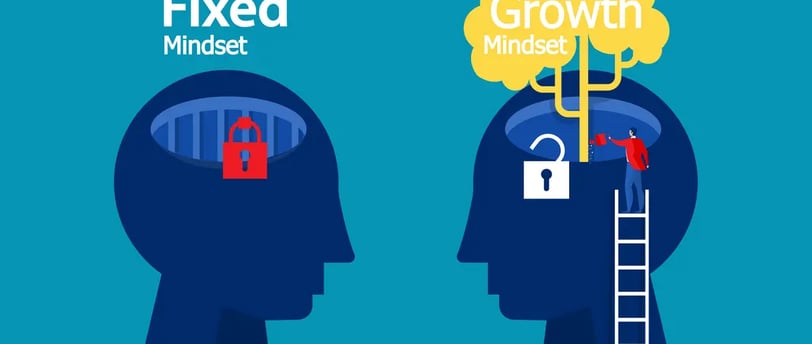
1. Understanding Growth vs. Fixed Mindset
Fixed Mindset:
- Belief: Talent, intelligence, or luck determine success.
- Behavior: Avoids challenges, gives up after losses, resists feedback.
- Example: A trader blames "rigged markets" for losses instead of analyzing mistakes.
Growth Mindset:
- Belief: Skills improve with practice, and failure is a teacher.
- Behavior: Seeks challenges, persists through setbacks, embraces learning.
- Example: After a losing streak, a trader reviews their journal to identify patterns.
Why It Matters:
A growth mindset fosters resilience, adaptability, and continuous improvement—critical traits in unpredictable markets.
2. Embrace Challenges as Learning Labs
Why Challenges Matter:
Markets are inherently volatile. Avoiding risk leads to stagnation; embracing it builds skill.
Action Steps:
1. Trade Small Positions First: Test new strategies (e.g., options, swing trading) with minimal risk.
2. Post-Trade Analysis: After every trade, ask:
- Did I follow my plan?
- What worked? What didn’t?
- How can I adjust my strategy?
3. Example: A trader experiments with trailing stop-losses during earnings season to manage volatility.
---
Focus on Process, Not Profit
The Problem with Obsessing Over P&L:
Short-term gains/losses are noise. Fixating on daily results leads to impulsive decisions.
Process-Oriented Metrics to Track:
- Adherence to your trading plan (e.g., “I followed my entry/exit rules 90% of the time”).
- Emotional control (e.g., “I avoided revenge trading after a loss”).
- Risk management consistency (e.g., “I never risked more than 2% per trade”).
- Example: A trader celebrates sticking to their stop-loss during a market panic, even though it resulted in a loss.
4. Reframe Failure as Feedback
Cognitive Reframing:
Replace “I failed” with “I learned.” Losses are data points, not judgments.
The Post-Mortem Process:
1. Identify the Cause: Was the loss due to poor analysis, emotional bias, or external factors?
2. Adjust Your System:
- If overtrading caused losses → Set a daily trade limit.
- If FOMO led to bad entries → Create a pre-trade checklist.
3. Example: A trader realizes they ignored bearish indicators due to confirmation bias → starts using a bias-neutral checklist.
5. Commit to Lifelong Learning
Knowledge Pillars for Traders:
1. Market Mechanics: How liquidity, order flow, and news impact prices.
2. Psychology: Biases (e.g., anchoring, recency) and emotional triggers.
3. Strategy Development: Backtesting, risk-reward ratios, position sizing.
6. Build Discipline Through Routine
Pre-Market Rituals:
- Review economic calendars and overnight news.
- Set daily goals (e.g., “Today, I’ll focus on risk management”).
Intraday Habits:
- Pause before executing trades to check for emotional impulses.
- Use timers to avoid overtrading (e.g., 3 trades max per session).
Post-Market Journaling:
- Record:
- Trade rationale.
- Emotional state (e.g., “Felt anxious during the midday slump”).
- Lessons learned.
7. Cultivate Patience and Detachment
- The Myth of Overnight Success:
Even legendary traders faced years of trial and error.
- Strategies for Detachment:
- Automate Decisions: Use stop-losses and take-profit orders to remove emotion.
- Zoom Out: Focus on quarterly performance, not daily swings.
- Non-Trading Hobbies: Engage in activities unrelated to markets (e.g., exercise, meditation) to reduce obsession.
- Example: A trader avoids checking positions hourly → reduces anxiety and improves decision-making.
8. Surround Yourself with Growth-Oriented Influences
Avoid Toxic Communities:
- Steer clear of forums glorifying “get-rich-quick” schemes or reckless trading (e.g., certain Reddit or Telegram groups).
Seek Mentorship:
- Join communities like Bear Bull Traders or Investors Underground that prioritize education.
- Follow traders who share transparent performance data and lessons.
9. Use Visualization and Affirmations
- Neuroplasticity in Trading:
Repetition rewires the brain. Visualizing success builds neural pathways for calm, disciplined execution.
- Daily Practices:
- Affirmations:
- “I am a disciplined trader.”
- “Losses are part of my growth.”
- Visualization: Imagine executing a trade flawlessly during a market crash.
10. Master Risk Management to Reduce Fear
- The Psychology of Risk:
Fear of loss diminishes when you know your downside is controlled.
- Rules to Live By:
1. 1-2% Rule: Never risk more than 1-2% of capital on a single trade.
2. Diversify: Avoid overexposure to one sector or asset.
3. Stress-Test Strategies: Simulate how your portfolio would perform in a 2008-style crash.
- Example: A trader limits position sizes → sleeps better during market turbulence.
Case Study: Transforming Failure into Growth
Scenario: A trader loses 30% of their account during a meme-stock frenzy.
Fixed Mindset Response:
- Blames “market manipulation.”
- Quits trading altogether.
Growth Mindset Response:
1. Analyzes Losses: Realizes they chased hype without due diligence.
2. Learns Risk Management: Studies position sizing and stop-loss strategies.
3. Rebuilds Slowly: Trades smaller sizes with a rules-based plan.
4. Results: Recovers losses within 6 months and achieves consistent profits.
Key Psychological Principles
1. Neuroplasticity: The brain adapts through practice. Repeated disciplined behavior becomes habit.
2. Cognitive Behavioral Therapy (CBT): Identify and reframe negative thoughts (e.g., “I’m a bad trader” → “I’m improving every day”).
3. Stoicism: Focus on what you control (your process) and accept what you can’t (market outcomes).
Final Takeaways
- Progress Over Perfection: Celebrate incremental improvements, like sticking to your plan for a week.
- Self-Compassion: Treat yourself with kindness after losses—avoid shame spirals.
- Long-Term Vision: Building a growth mindset takes months or years, not days.
By integrating these principles, you’ll transform trading from a stressful gamble into a skill-based craft. The market will always test you, but a growth mindset ensures you’ll evolve with it. 🧠📈
Read More :
Why Geminis Struggle to Hold Stocks
Astrology
Daily stock forecasts based on astrological insights.
Forecast
Insights
tradingwithmaxvictor@gmail.com
© 2025. All rights reserved.